When placing a custom mascot order, a business may begin with an idea about the character, colors, or overall style it wants. Having key information clearly prepared from the start helps the business and the design partner work toward the same concept before moving to a concept sketch and prototype.
A business does not need to have a finished drawing at the beginning. Instead, it is useful to define the intended use, brand characteristics that should appear, reference materials, and how feedback will be consolidated. These details provide a practical basis for discussing a custom mascot.
Before Ordering a Custom Mascot, Clarify Its Intended Use
The intended use influences how the mascot should be envisioned. Before starting a discussion, clarify whether the product will be used for an event, as a gift, for display, communications, or an internal activity. It is also useful to identify who will receive, use, or interact with the product.
The business can also consider whether the product will be used once or across multiple activities, and whether the desired feeling is friendly, playful, formal, or energetic. Another useful question is: which characteristics should help people recognize the brand through the mascot? These answers give the discussion a clearer direction without choosing on behalf of the business.
Prepare Your Logo, Brand Identity Guidelines and Reference Images
Gather the official logo currently in use, the brand color palette, and any logo usage guidelines the business has. These materials make it easier to discuss brand characteristics based on specific references rather than descriptions alone.
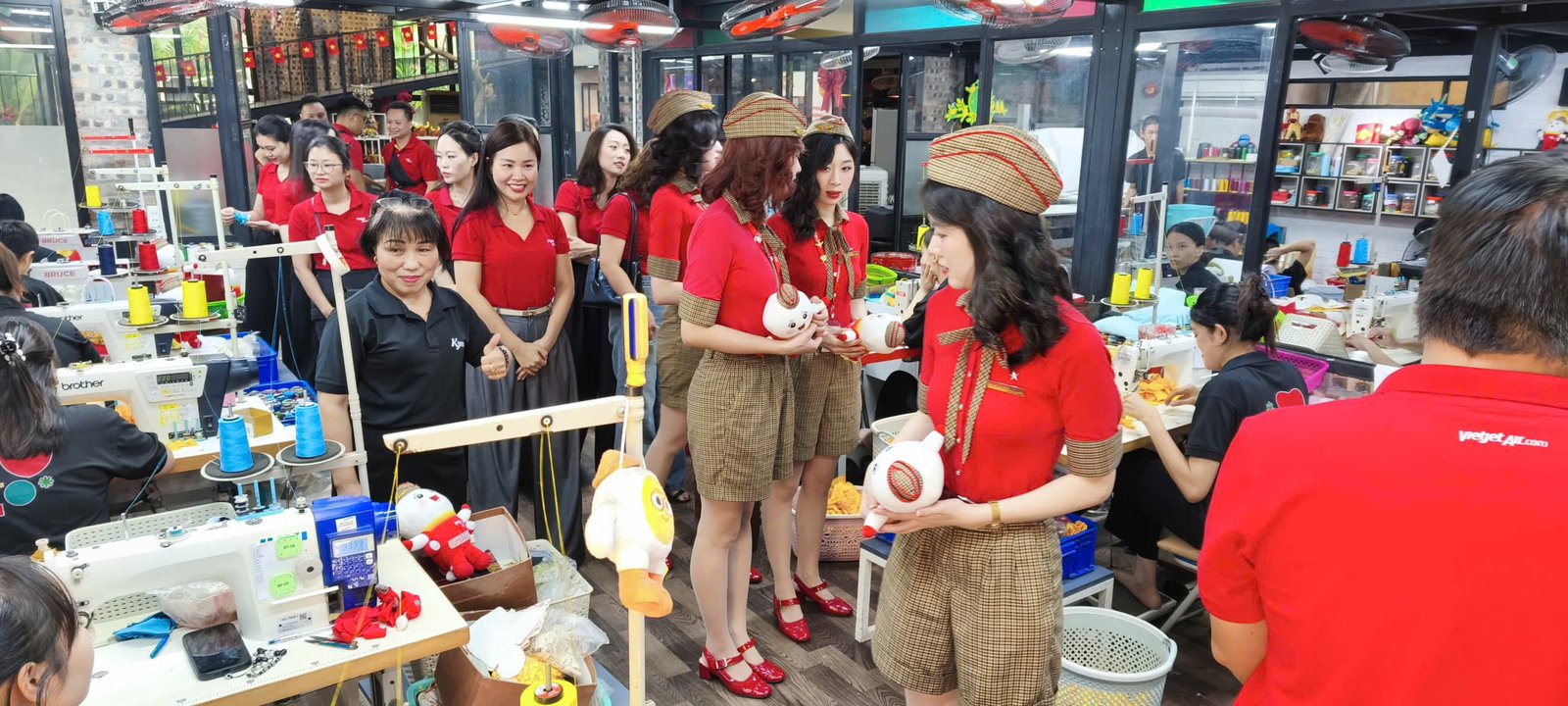
The business can also prepare images of relevant characters, products, or symbols, together with reference images that communicate the desired style. For each reference, distinguish the characteristics that must remain from those that can be adjusted. Clear-quality materials are more convenient for discussion.
Product Details to Align Before the Concept Sketch
Before the concept sketch, consider the main product characteristics: overall shape, the proportions of the head, body, arms and legs, facial expression, and primary and secondary colors. Clothing, accessories, logo placement, and other brand details should also be discussed when relevant.
Expected size, material or desired surface feel, estimated quantity, usage context, and packaging can also be considered from the beginning. When some details cannot be decided immediately, the business can indicate their level of priority and continue discussing them with Kym Việt rather than fixing every detail too early.
From Concept Sketch to Prototype: What Should Customers Review?
When reviewing a concept sketch and prototype, focus on elements directly represented in the product: shape and proportions, colors, expression, logo placement, clothing, accessories, material, and surface feel. Also consider whether the details are clear enough and whether the mascot fits the intended use.
A two-dimensional drawing and a product made from physical materials can create different impressions. A prototype therefore provides a visual reference for further evaluation and refinement. The business should review specific product characteristics rather than relying only on an overall impression.
How to Give Clear, Easy-to-Consolidate Prototype Feedback
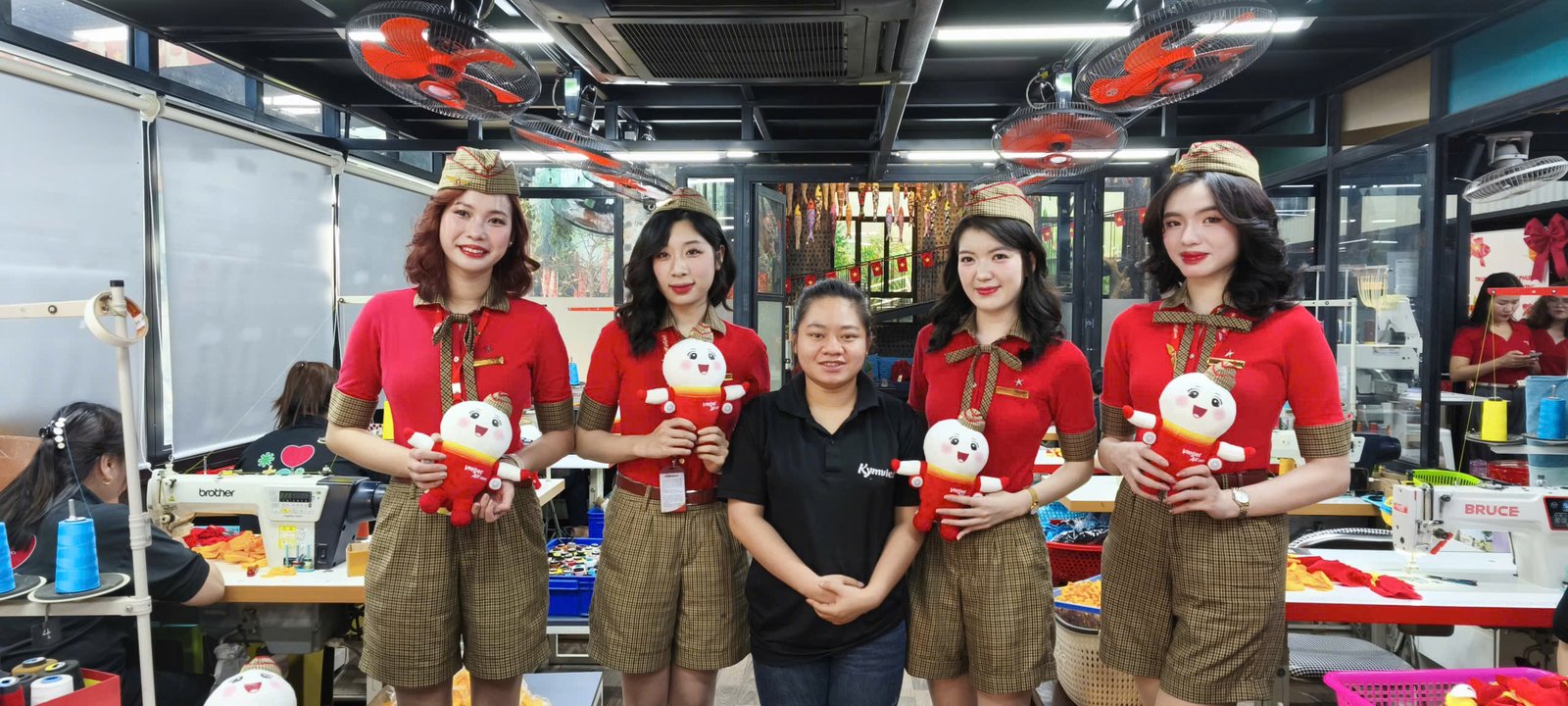
Appointing one representative to consolidate feedback can keep comments from different people within the business more focused. Feedback can be grouped into areas such as shape, color, face, logo, clothing, accessories, and material.
Each comment should identify what needs to remain unchanged and where an adjustment is needed. Images or direct annotations can be attached when they help communicate a change more precisely. It is also useful to distinguish mandatory requirements from preferences and align internal opinions before sending feedback.
A Question Set for the First Discussion
Businesses can use the questions below to gather information before discussing a brand mascot:
- What is the mascot intended to be used for?
- Who will receive or use it?
- Which brand characteristics need to be represented?
- What brand assets are currently available?
- Are there reference images or styles?
- What shape, expression, and colors are desired?
- What are the expected size and quantity?
- In what context will the product be used?
- Are there requirements for clothing, accessories, or packaging?
- Who will consolidate feedback and handle internal approval?
Frequently Asked Questions About Custom Mascot Orders
What if the business does not have a mascot drawing yet?
A finished drawing is not necessary to start. The business can prepare the intended use, target recipients or users, brand assets, reference images, and desired characteristics such as shape, expression, and colors.
Should we send many reference images?
You can send images that help communicate a desired style or characteristic. It is important to indicate which elements of each reference are useful and which do not fit the business’s direction.
Why provide the expected quantity and size?
Quantity and size are directly related to how the product is envisioned and where it will be used. Defining them early gives both sides a clearer basis for discussing the appropriate option.
What should we focus on when reviewing the prototype?
Review the shape, proportions, colors, expression, logo placement, clothing, accessories, material, surface feel, and brand recognition. The product’s fit with its intended use should also be considered.
How can we give clear prototype feedback?
Appoint one person to consolidate feedback and organize comments by detail group. Clearly state what should remain and what should change. Images or direct annotations can help communicate the exact adjustment when needed.
Conclusion
A custom mascot order starts with clarifying what the business wants the product to communicate. Intended use, brand assets, product characteristics, and a clear approach to consolidating feedback are useful information to prepare for a focused discussion.
Prepare your existing brand assets and discuss your requirements with Kym Việt to clarify the direction together before the concept sketch and prototype stages.