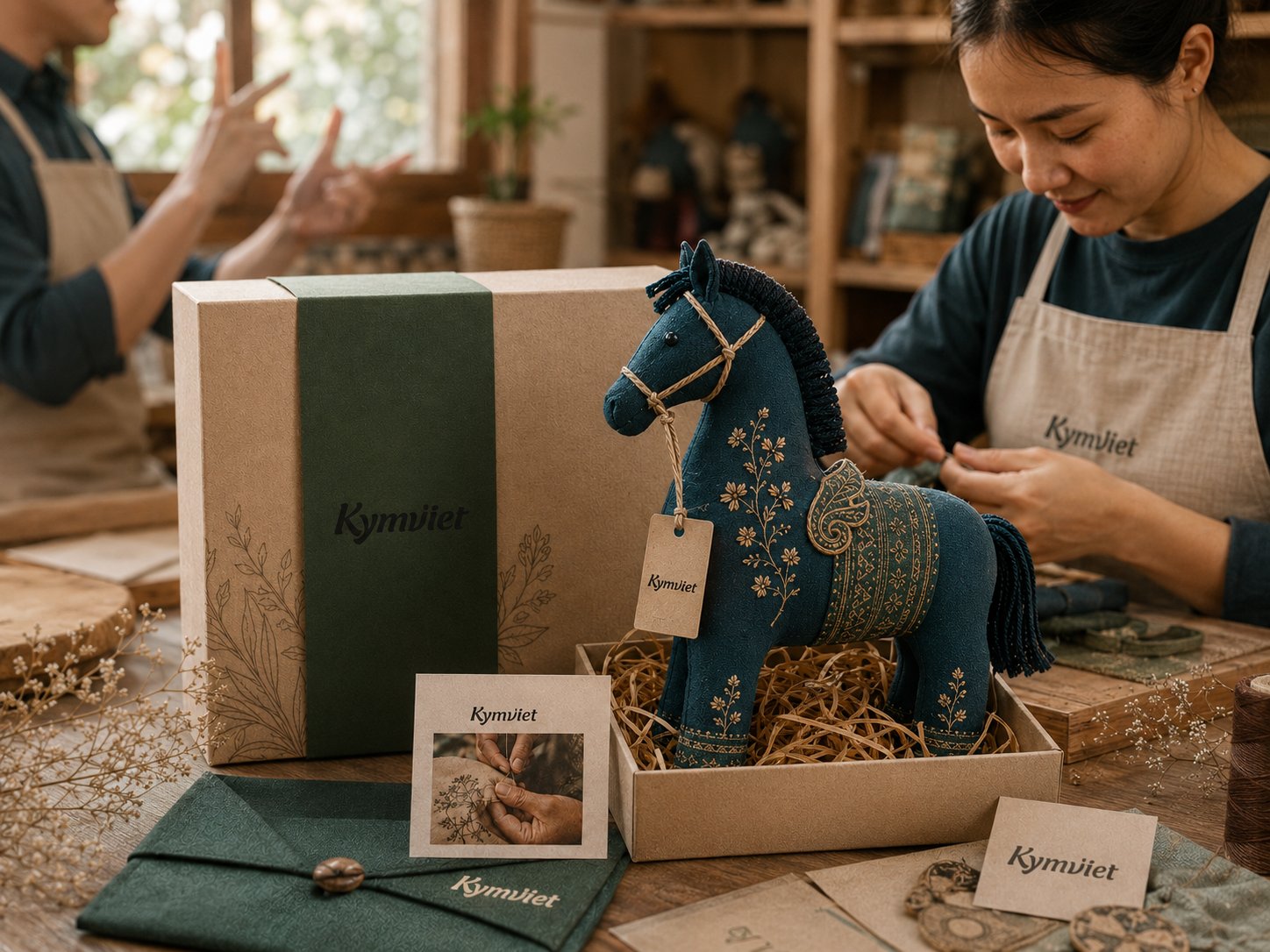
What really sets these two options apart?
When planning year-end corporate gifts, businesses often face two directions: choosing logo-printed products in the common way, or seeking handmade gifts with a story. Each direction has its own role, and understanding the difference helps HR, procurement, and CSR make decisions aligned with their goals.
Logo-printed gifts are typically mass-produced, focusing on displaying the brand on the product surface. In contrast, handmade gifts with a story emphasize the process of creating the product, from the artisans, techniques, materials, to the values the business wants to convey. A logo helps identify the giver; a story can help the recipient understand how the gift was made and what values the business is choosing.
Comparison table by criteria for HR, procurement, and CSR
Below are practical criteria to compare the two options, helping purchasing and internal communications teams gain a comprehensive view before deciding.
- Gift objectives: Logo-printed gifts suit when needing broad brand recognition and large quantities. Handmade gifts with a story suit when aiming to create a deep impression, linked to ESG values and appreciation for the recipient.
- Traceability of the story: With logo-printed gifts, the story is often not emphasized or difficult to verify. With handmade gifts, the story must be based on verifiable information about the artisans, techniques, materials, origin, process, and packaging.
- Craftsmanship and origin: Logo-printed gifts are usually industrially produced, with little expression of handicraft. Handmade gifts involve artisans, with specific techniques and stages, and clear origin.
- Utility: Both need to ensure the recipient can use them in daily life or work. Handmade gifts are often designed for practical use, but suitability to the recipient and context must be considered.
- Customization: Logo-printed gifts are easy to add names or logos. Handmade gifts can be customized, but technical limitations, quantity, and timeline must be assessed after receiving actual confirmation from the supplier.
- Packaging: Packaging for logo-printed gifts is often simple, focusing on brand recognition. Packaging for handmade gifts can be custom-designed, contributing to the story and enhancing the unboxing experience.
- ESG documentation: Handmade gifts can provide documentation on social impact and material origin, but only if the supplier has clear evidence. Logo-printed gifts often have little information to support internal ESG communication.
- Timeline and procurement risks: Logo-printed gifts are often readily available with short production times. Handmade gifts may require longer design, sampling, and production times, posing timeline risks if not carefully planned.
When might ordinary logo-printed gifts be suitable?
Logo-printed gifts are a reasonable choice when the business needs large quantities, has budget constraints, and is short on time. For example, in events with hundreds of guests, preparing handmade gifts in large quantities may not be feasible in terms of time and cost.
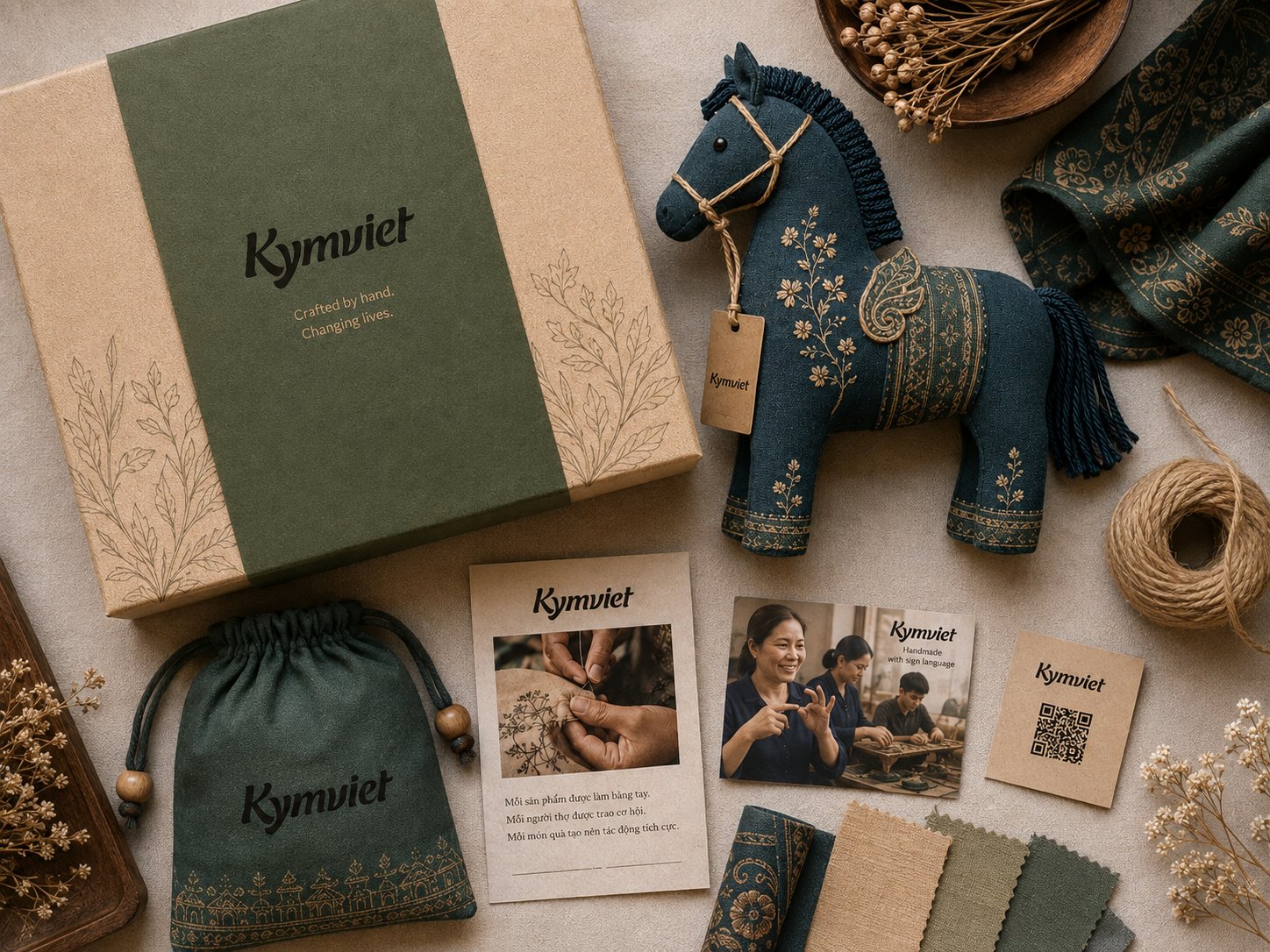
Additionally, if the main goal is to increase brand recognition, an attractive, useful logo-printed gift will serve well. However, note that logo-printed gifts often lack differentiation and may not leave a lasting impression on recipients.
When might handmade gifts with a story be suitable?
Handmade gifts with a story are suitable when the business wants to convey core values, showing care for the community and environment. Especially for businesses with an ESG strategy, this gift helps demonstrate their commitment concretely.
If recipients are high-level partners, important clients, or employees with significant contributions, a meticulously crafted handmade gift with a story will leave a deep impression. However, the business must be willing to invest time in design, production, and information verification.
What should “having a story” be verified by?
A gift called “having a story” must be based on verifiable information. The supplier needs to provide documentation on materials, origin, production process, artisan information, and any social impact related materials.
Businesses should request the supplier to provide certificates, process photos, and if possible, visit the workshop to verify. This helps avoid unsubstantiated claims and ensures the story the business tells is authentic.
How to talk about artisans in internal communications
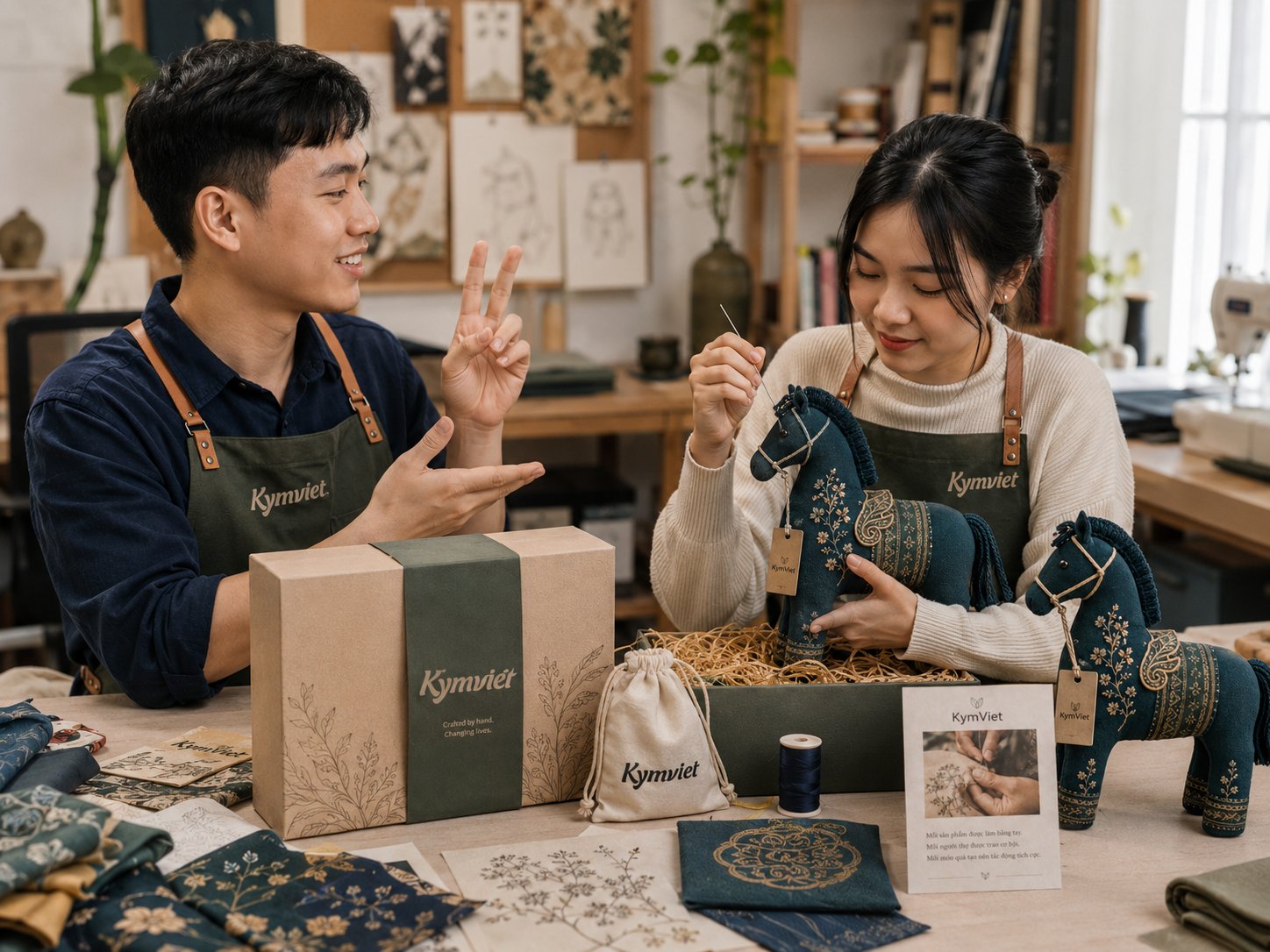
When introducing handmade products, businesses should focus on the craftsmanship, techniques, and the artisan’s role in creating the product. For example, an artisan may be responsible for stuffing, shaping, or hand embroidery – stages that require skill and experience.
Mentioning that an artisan is hearing-impaired should be done naturally, as ordinary information, without exploiting pity. The key is to respect them as skilled craftspeople who contribute to the product’s value.
Checklist for evaluating suppliers before making a decision
Before requesting quotes or approving samples, HR, procurement, and CSR teams should check suppliers based on the following criteria:
- Can the supplier provide actual product samples for quality assessment?
- Are materials and their origin transparent, with supporting documentation?
- Is the production process clearly described, with the possibility of visiting or seeing images?
- Does customization (logo, message) meet requirements, with any limitations on technique, quantity, or time?
- Is packaging designed appropriately, with information on materials and origin?
- Can the supplier provide documentation on social and environmental impact (if any)?
- Are the sample approval, production, and delivery processes clearly stated, with timeline commitments?
Frequently asked questions
Do gifts with a story have to include a lot of information on the product itself?
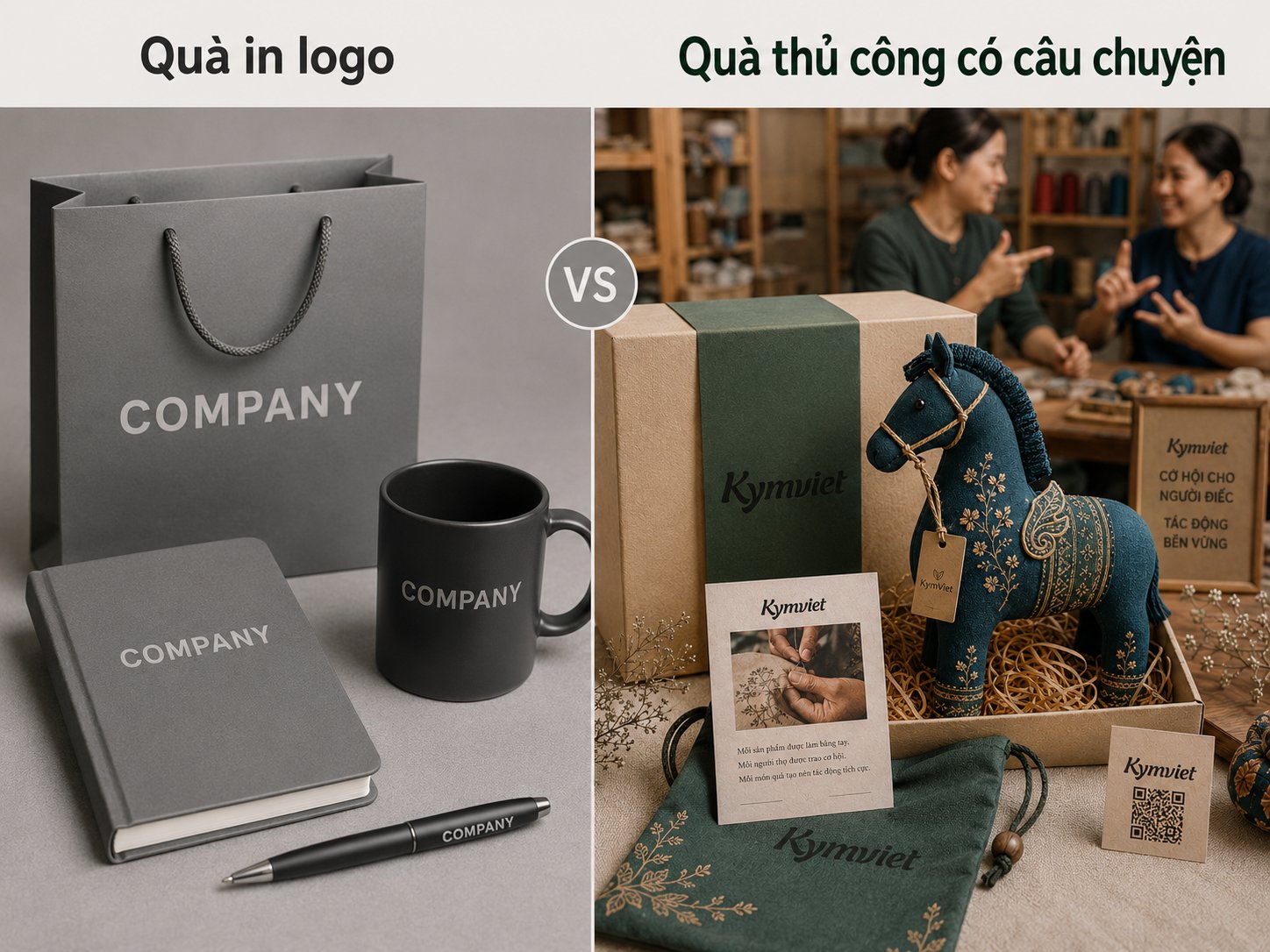
Not necessarily. The story can be conveyed through packaging, accompanying cards, or digital content such as videos or articles. The product can maintain a clean design, focusing on quality and aesthetics.
What documentation should we request from the supplier?
Businesses should request documentation on material origin, production process, artisan information, and any social impact certificates if available. This ensures transparency and avoids communication risks.
How should we start sample approval?
Contact the supplier to discuss specific requirements, then ask them to send a sample. This process should be planned early to allow time for adjustments and production.
Conclusion
The choice between logo-printed gifts and handmade gifts with a story has no absolute answer. Businesses should base their decision on specific goals, evidence from suppliers, and suitability to the recipients.
If you are looking for a gift that both reflects your brand and carries human values, contact us to discuss your requirements and verify facts before requesting a quote. We are ready to accompany you in creating meaningful gifts.