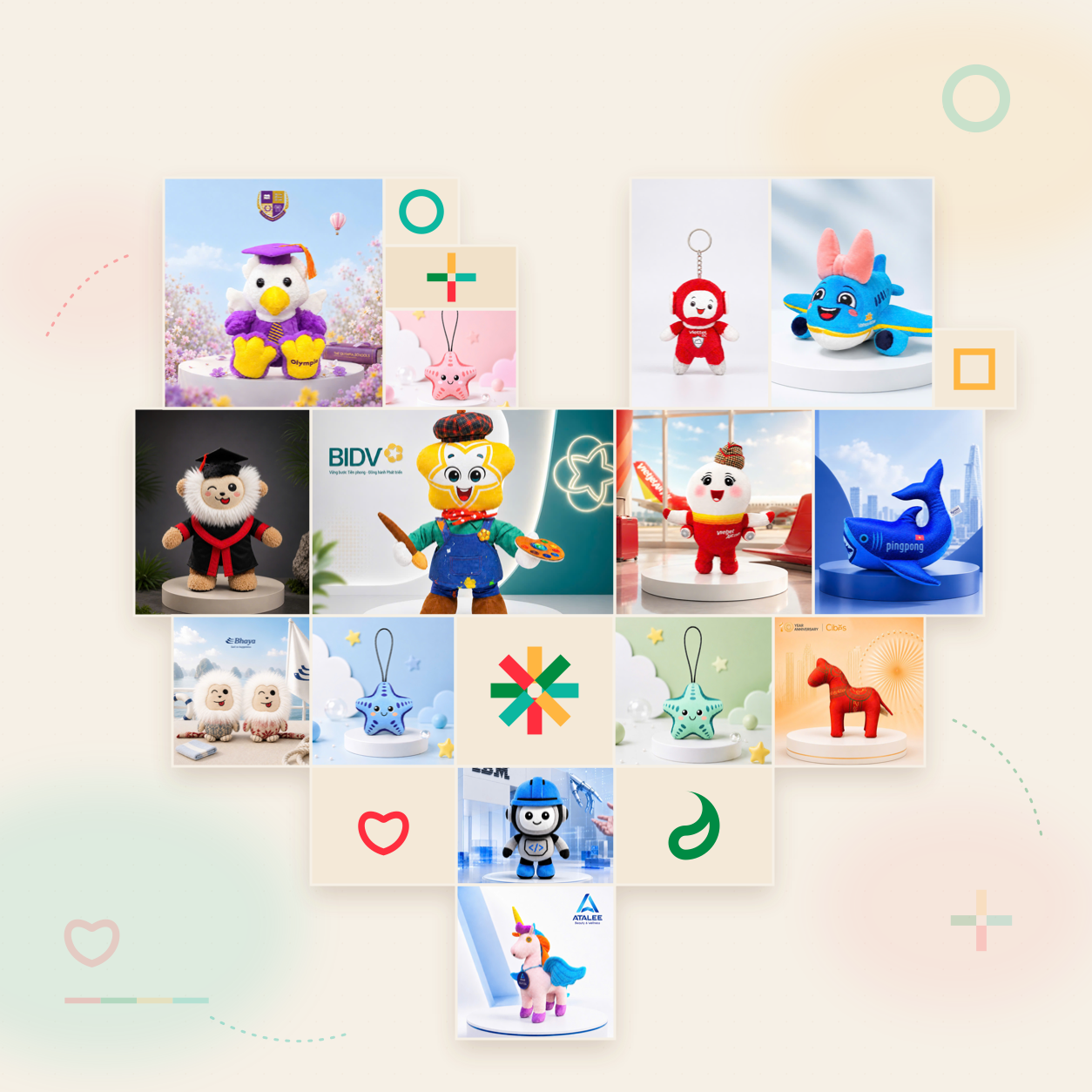
For year-end gifting in 2026, HR managers, procurement officers and CSR/sustainability managers need to balance several priorities. A gift should suit its recipients, carry recognizable branding and offer enough substance for the company to present it with confidence.
A logo and branded packaging identify the sender. The depth of a gift, however, also comes from product quality, craftsmanship and verifiable information about the maker, materials, process and relevant impact. These two layers can reinforce each other rather than compete.
What can a logo on the gift box achieve?
A logo provides an immediate visual link to the company. When its size, placement and colors work with the design, it can identify the sender without dominating the product. Packaging can also create consistency across items in a gift set.
A logo alone does not explain why the product was selected, who performed its skilled processes or how finishing standards were controlled. That substance comes from concise, specific information that can be checked. Brand identity and product storytelling are therefore best treated as complementary elements.
What makes a product story credible?
A useful story does not need to be long. It can begin with the maker’s role: which stage requires precision, which actions shape the form and how stitching, tension or finishing quality is managed. This approach places professional skill at the center of the narrative.
Information about materials, origin, production and impact should be tied to supporting data. Instead of relying on broad labels such as “sustainable” or “responsible,” a buying team can ask a supplier to define the evidence, scope and reference behind each statement.
Comparing conventional gifts with handcrafted gifts that carry a story
A conventional gift may be suitable when familiarity, clear branding or a straightforward selection process matters most. A handcrafted gift with a story gives the sender more substance to share, but that advantage depends on the actual quality of the product and its relevance to the recipient.
Both options should be assessed against the same criteria: finished quality, recipient relevance, retellability, authenticity, branding treatment and operational requirements. A handcrafted product is not automatically the stronger choice, just as the size of a logo is not a complete measure of a gift’s value.
Assessing corporate gifts through an ESG lens
An engaging story does not automatically make a product an ESG-aligned gift. Under the E pillar, buyers can examine information about materials, origin and production. Under the S pillar, they can look at professional roles, participation in production and impact supported by evidence.
For the G pillar, transparency is central: who is accountable for the information, what scope it covers and what documentation supports each statement. Reviewing the three pillars separately prevents a social narrative from standing in for a complete ESG assessment.
Putting artisan skill at the center
An artisan profile should begin with expertise: the stage they handle, the technique involved, the precision required and the expected finishing standard. A correctly described craft detail is more informative than general praise because it shows where the value of the work lies.
Personal information should help readers understand the professional role, not turn disability into a reason to purchase. A respectful introduction presents artisans as skilled makers, focusing on technique, responsibility and the quality of their work.
A checklist for HR, procurement and CSR/sustainability teams
The three functions can agree on shared criteria at the start of the selection process. HR can focus on the recipient experience, procurement on quality and operational fit, and CSR/sustainability on the scope and basis of ESG-related content.
- Product: Which criteria are used to assess finished quality?
- Recipient: Does the design and function suit the gifting context?
- Story: Is there a clear reference for every material statement?
- ESG: Which pillar does each statement relate to, and what is its scope?
- Operations: Do quantity, sampling, production and delivery fit the plan?
- Branding: Do the logo, packaging and story card form a coherent whole?
The checklist also creates a common basis for comparing suppliers. A strong proposal needs to work across product, content and operations instead of relying on a single visual feature.
Combining a logo with a product story card
The logo can appear on the packaging, a hangtag or an accompanying element, while the product story has its own readable space. A story card can prioritize a few useful facts: the role behind a production stage, a notable aspect of the technique and supported information about materials or production.
Kym Việt designs and produces mascots and corporate gifts. Its B2B ranges include custom-designed mascots, gift sets with branded packaging, keychains and limited-edition collections. Custom-designed mascots have a minimum order of 100 products and a production time of 6–10 weeks, including 7–14 days for design, 7–10 days for sampling and 3–6 weeks for production.
Companies can discuss corporate gift requirements with Kym Việt at info@kymviet.com.vn, via the general hotline at +84 984 089 990 or the B2B number at +84 912 759 599. A conversation centered on recipients, product criteria and the intended message can help shape a suitable direction.